
Safety Data Sheet Search
*Disclaimer: ChemicalSafety’s Global database may contain SDS that have been discontinued or have an outdated version. It is up to the user to double-check directly with the manufacturer or supplier to make sure they are acquiring the latest SDS for each product.
-
SDS Overview
-
GHS Pictograms
-
Transportation
-
Search Instructions
-
Permissions Requests
What is a Safety Data Sheet?
A Safety Data Sheet (SDS), or Material Safety Data Sheet (MSDS), is a standardised document that contains crucial occupational safety and health information. In Great Britain, SDS are required under the UK REACH Regulation. According to this framework, suppliers must provide an up-to-date SDS where required, so that hazard information is communicated to those who handle or use hazardous chemicals. These sheets are comprehensive and cover essential details such as chemical properties, potential health and environmental hazards, recommended protective measures, as well as safety precautions for proper storage, handling, and emergency measures.
Globally Harmonized System
The Globally Harmonized System (GHS) is a comprehensive set of international guidelines developed by the United Nations. Its primary objective is to help ensure the safe manufacture, handling, use, disposal, and transportation of hazardous chemicals. GHS underpins hazard classification and communication systems used in many jurisdictions, including the GB CLP regime. The GHS system serves several key purposes:
- Classification of Chemical Data and Hazard Criteria: The GHS provides a standardised approach to classifying chemical substances and mixtures based on their inherent hazards. This classification helps in identifying and communicating the potential risks associated with specific chemicals.
- Identification of Health, Physical, and Environmental Hazards: By utilising the GHS, it becomes possible to identify and understand the health, physical, and environmental hazards posed by a particular chemical. This information is crucial for ensuring proper handling, storage, and disposal practices.
- Communication of Hazard Information and Protective Measures: The GHS establishes a well-defined system that enables chemical manufacturers and distributors to effectively communicate the hazards associated with their products. This includes providing clear information on recommended protective measures to minimise risks.
SDS Structure and Format
Safety Data Sheets (SDS) follow a standardised structure consisting of sixteen sections. These sections are designed to provide quick access to essential information necessary for chemical users to ensure safe handling practices and to aid emergency response personnel. Here is an overview of the different sections:
Sections 1-8: These early sections focus on providing key information that may be required urgently. They cover topics such as identification, hazards, composition, first aid measures, and firefighting measures.
Sections 9-11: These sections contain technical and scientific data related to the substance or mixture. Information regarding stability, reactivity, physical and chemical properties, and other relevant data is included here.
Sections 12-15: These sections are part of the standard 16-section SDS format. They typically cover ecological information, disposal considerations, transport information, and regulatory information.
Section 16: The final section provides details about the SDS itself. It includes information such as the revision date and any changes made since the previous version.
You may visit HSE guidance on Safety Data Sheets and COSHH requirements for more information.
SDS Information for Employers
Employers must ensure that employees have access to the information needed to work safely with hazardous substances, and SDS help employers carry out the COSHH risk assessment where chemical products are used. Employers may keep this information in paper files or electronic systems, provided it is accessible to workers who need it. If the employer does not have an SDS for a supplied hazardous chemical where one is required, they should contact the supplier to obtain the current version. In this sense, online SDS databases can offer practical advantages over binder-based systems by helping users locate current documents more efficiently. However, an SDS is not itself a COSHH risk assessment.
Hazard Communication Standard Pictogram
The COSHH Regulations require suitable hazard information on labels and packaging to alert users to the chemical hazards to which they may be exposed. Under GB CLP, the hazard pictogram on the label is determined by the chemical hazard classification. The pictogram consists of a symbol on a white background framed within a red border and represents a distinct hazard or hazards.
| GHS Hazard | Pictogram | Hazard Class & Hazard Category |
|---|---|---|
| Explosive |  |
|
| Flammable |  |
|
| Oxidizing |  |
|
| Compressed Gas |  |
|
| Corrosive |  |
|
| Toxic | 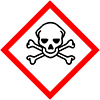 |
|
| Corrosive | |
|
| Irritant |  |
|
| Health Hazard |  |
|
| Environ- mentally Damaging |  |
|
Class 1: Explosives
| GHS Hazard | Pictogram | Hazard Class & Hazard Category |
|---|---|---|
| Divisions 1.1–1.3 |  |
Explosives
|
| Division 1.4 |  |
Explosives
|
| Division 1.5 | 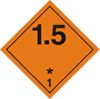 |
Explosives
|
| Division 1.6 | 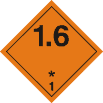 |
Explosives
|
Class 2: Gases
| GHS Hazard | Pictogram | Hazard Class & Hazard Category |
|---|---|---|
| Division 2.1 |  |
Flammable Gases
|
| Division 2.2 |  |
Non-flammable Non-toxic Gases
|
| Division 2.3 |  |
Toxic Gases
|
Classes 3 and 4: Flammable Liquids and Solids
| GHS Hazard | Pictogram | Hazard Class & Hazard Category |
|---|---|---|
| Class 3 |  |
Flammable Liquids
|
| Division 4.1 |  |
Flammable Solids, Self-reactive Substances and Solid Desensitized Explosives
|
| Division 4.2 |  |
Substances Liable to Spontaneous Combustion
|
| Division 4.3 |  |
Substances Which in Contact with Water Emit Flammable Gases
|
Other GHS Transport Classes
| GHS Hazard | Pictogram | Hazard Class & Hazard Category |
|---|---|---|
| Division 5.1 | 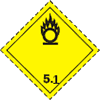 |
Oxidizing substances
|
| Division 5.2 | 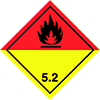 |
Organic Peroxides
|
| Division 6.1 | 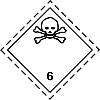 |
Toxic Substances
|
| Class 8 |  |
Corrosive Substances
|
Basic Searches
Enter the chemical name in the Substance field and click on the Submit button. A list of matching results from one or more manufacturers will be returned if the chemical is found in the database. You can then click on the desired result and a summary page will open.
GHS labels and safety data sheets can be printed or downloaded. Click on the View GHS Label button at the bottom left of the summary page to open the GHS label. Click on the View SDS button at the bottom right of the summary page to open the safety data sheet.
Advanced Searches
More advanced searches can be performed by populating multiple fields with data. For example, enter the chemical name in the Substance field and enter the manufacturer name in the Manufacturer field. This will return fewer, but more precise results. Also, the Search Type can be manipulated using the “begins with” and “contains” drop-down selections.
You can search for SDS’s using the CAS number. This will return only pure chemicals and not mixtures that contain that CAS number.
Use Guidelines
ChemicalSafety’s SDS and GHS database is a free service available to organizations of all types. For-profit organizations are granted permission to access ChemicalSafety’s SDS Search from ChemicalSafety’s website. There are no restrictions on the number of searches performed. Educational and not-for-profit institutions may embed ChemicalSafety’s SDS search on their own websites (see instructions below).Inserting a Direct Link 
Inserting a direct link to ChemicalSafety’s SDS search page is the easiest solution and requires minimal effort. For convenience, the link will open in a new browser tab. To insert a direct link to our SDS search page, add this code (copy & paste) to your webpage:
Click here for SDS search